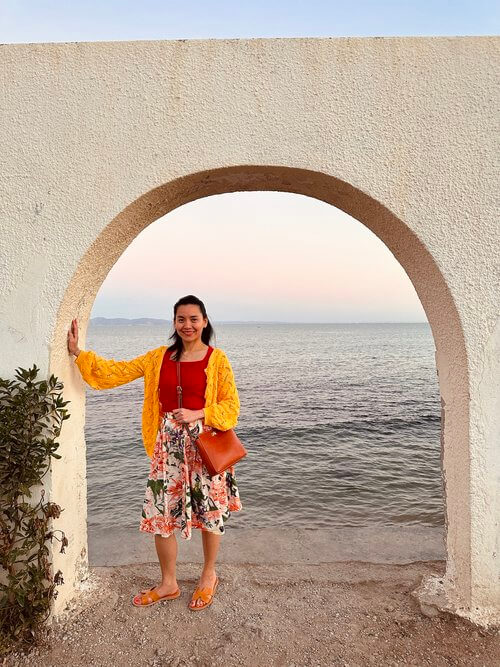

Nomad Nest Meaning Explained By A Digital Nomad
What is a nomad nest?
In 2014, I started using the term nomad nest to describe my temporary home while travelling solo as a digital nomad. Unlike just saying “apartment” or “hotel room,” a nomad nest feels more personal and encompassing. To me, it’s the place I stay that I call home, even if only for a short time.

How the nomad nest concept began
When I left my native island, Mauritius, in 2002 to live and work abroad, I experienced more than just a change of address—I lost what I once called home. Not just the physical structure with walls and a roof, but the deeper sense of safety and belonging that comes from family and emotional connection.
My parents’ marriage ended that year, and with it, the stable foundation of home as I knew it. Whenever I returned to Mauritius to visit, I felt like a stranger rather than someone coming back home. They say home is a feeling, and I came to understand how true that is because it was a feeling I no longer felt in the place I grew up.
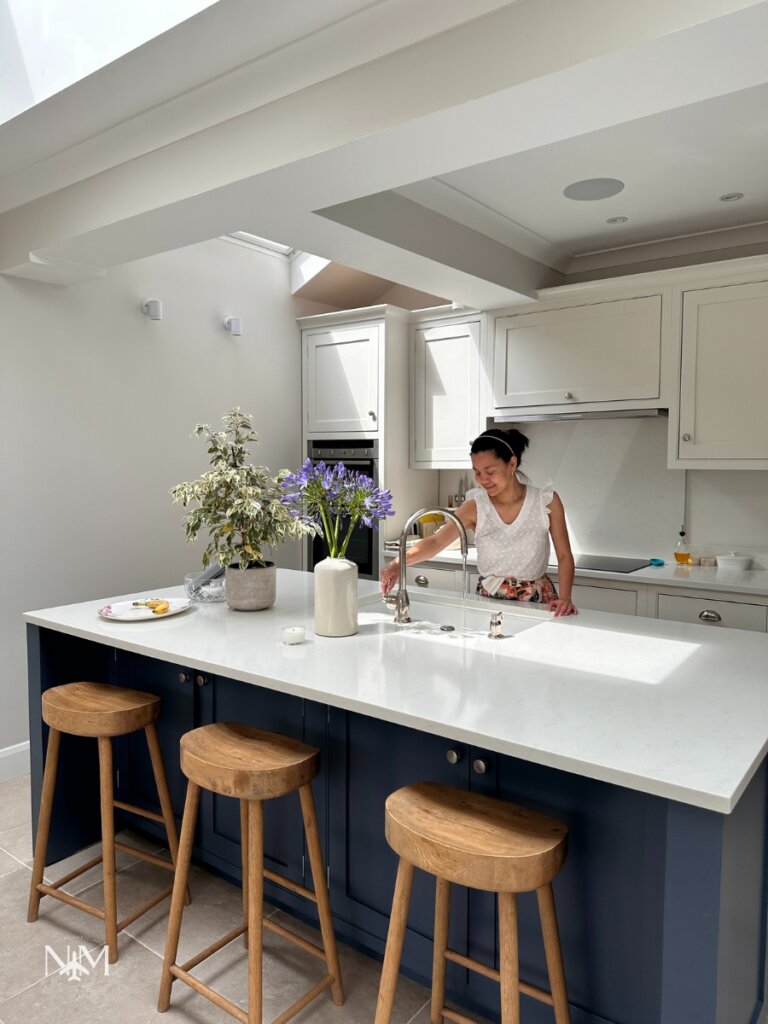
Over the past two decades, instead of dwelling on what I lost, I embraced constant change. I moved from place to place, creating new temporary shelters—my “nomad nests.” Each one became a little refuge, a source of comfort and stability in an otherwise unpredictable life.
These nests – whether a private apartment or hotel room – became the constants in my ever-changing world. I was always moving from nest to nest, and that was the one certainty I could count on.
Packing, unpacking, leaving, moving, checking in, making a cup of tea in this foreign place. It’s familiar to me. It feels like coming home. It’s like bye nomad nest, onward to my next nomad nest!
beatrice – nomadic mauritians
Redefining home: the nomad nest today
The greatest lesson I’ve learned on this journey is that home can be redefined. Today, I cultivate a sense of home within myself, no matter where I am. I give my physical shelter a name (my “nomad nest”) and create grounding rituals and rhythms that help me feel settled. I embrace the unfamiliar as familiar, while rooting myself deeply in my Christian faith.
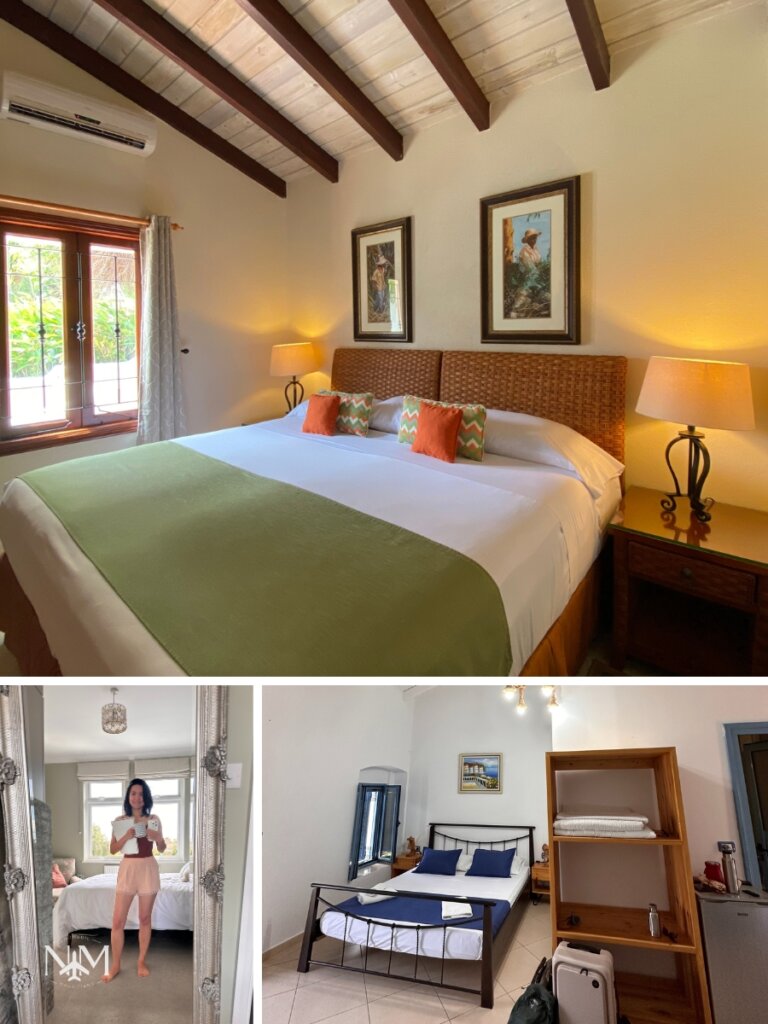
A nomad nest takes many forms.
What makes a nomad nest a home
A nomad nest is more than just a place to sleep. It’s a combination of physical comfort, emotional safety, and meaningful connections. It’s where routines and rituals help you feel grounded despite constant change.
For me, a nomad nest includes:
- Physical comfort: a cozy bed, reliable Wi-Fi, and a space where I can work and relax
- Emotional security: feeling safe, peaceful, and able to recharge
- Relational connection: sharing the space with people or pets who add warmth or companionship, even if temporarily
Each nest might look different but what matters is the feeling it creates: home.
Nomad nest: Explore the different types
Over the years, I’ve experienced many different kinds of “nests” — each one a temporary home that offered comfort, safety, or connection in its own way. Your nomad nest might shift depending on your season of life, your priorities, or your personality.
Let’s explore the different types of nomad nests and what each one uniquely offers.
Private accommodation
This is our main type of nomad nest. We usually rent a one or two-bedroom apartment for around a month, with all bills like rent, internet, and electricity included. These are often instant-book and self-check-in, which we appreciate for simplicity and ease.
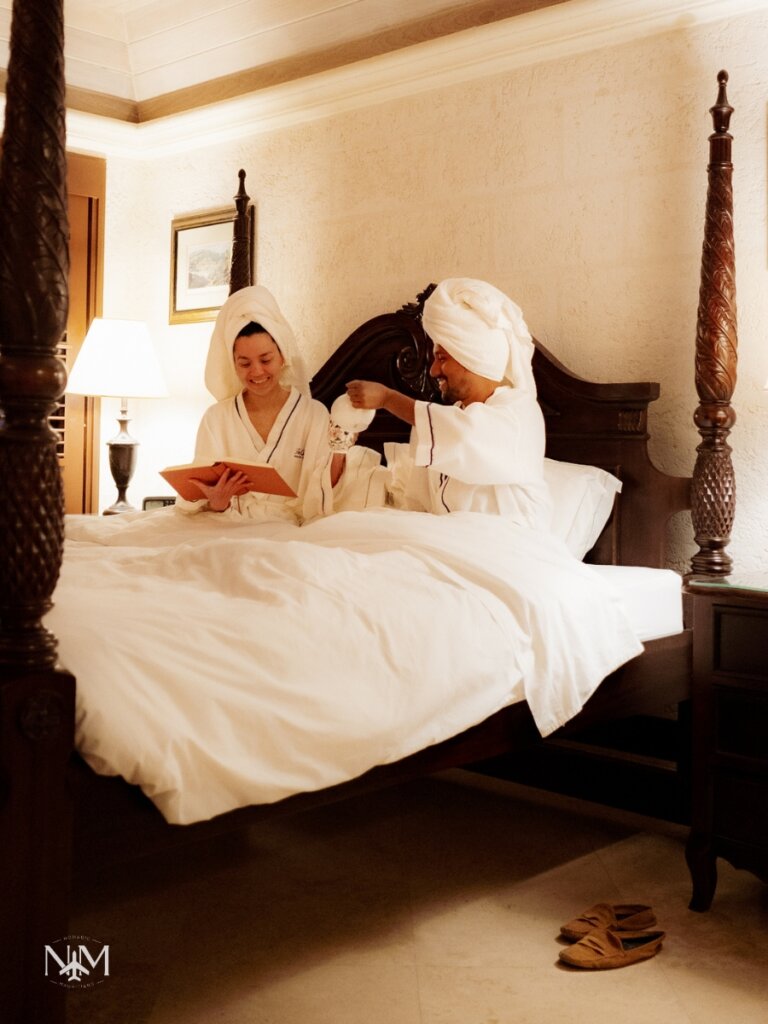
Sometimes, because we book a month or more, we get weekly cleaning included or we start to bond with the neighbours or the local landowner.
Pros:
- Feels like “home” quickly
- More control over space and cleanliness
- Great for couples or introverts needing quiet
Cons:
- More time spent planning logistics
- Can be pricey in high-demand cities
- Less built-in community
Transit or travel days accommodation
As a nomad, you will have many travel days or transit days. This is a short overnight stay when we’re in between destinations. It might be an airport hotel or a guesthouse close to the train station. Comfort matters less here than convenience and location.
Pros:
- Easy access to transport connections
- Great to take it easy, even nap
- Minimal unpacking
Cons:
- Not truly “home” based on the aesthetic (or lack thereof!)
- Limited facilities for cooking or working
- Not much to do or explore nearby due to location
Homestay accommodation
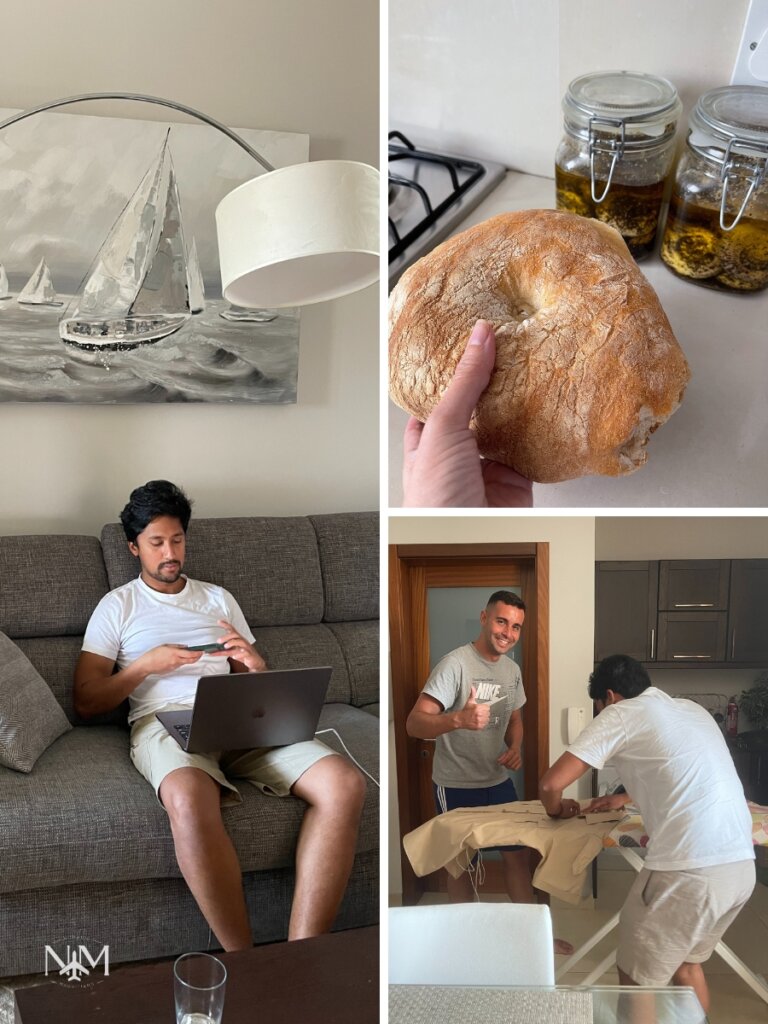
Homestays give you a room in someone’s home, often with shared spaces. This nomad nest is ideal if you want to connect with locals. We’ve stayed with local families before, either sharing the same apartment with our own private room or sharing a yard or courtyard. It was good to get insider tips from them.
Pros:
- Deep cultural immersion and connection with locals
- Learn traditions or practice local language from locals
- Opportunity to build friendships and community
Cons:
- Limited privacy and personal schedule
- More social interaction, which may challenge introverts
- Lack of some comforts (e.g no room service)
Co-living accommodation
This nomad nest is where you live in a close-knit community with others. Co-living spaces are designed for remote workers and digital nomads, offering private rooms with shared work and social areas.

Pros:
- Ready-made network of nomads
- Reliable internet and workspaces
- Events and group activities like ‘family meals’
Cons:
- Can be noisy or busy
- Less control over the environment or ambiance
- May have shared kitchen or bathrooms and more ‘rules’
Home base accommodation
A home base is a nomad nest you return to between travels. It’s a stable “nest” that anchors your nomadic lifestyle. For some, this might be a long-term rental or a family property they use seasonally. Others invest in real estate to live in which they rent out when travelling.

We had a home base in Mauritius where we rented a two bedroom for two years, then another on the Mediterranean island of Gozo (sister island of Malta),
Pros:
- Can earn income when rented out
- Safe storage for belongings
- Usually cheaper long-term rates
Cons:
- Risk of accumulating stuff
- More prone to buying extras (like our vacuum cleaner in Malta)
- Maintenance costs
House sitting accommodation
Through house sitting, we stay in someone’s home while they’re away. This has given us some of our most memorable nomad nests. Read our experience in a detailed post about house sitting here.
Pros:
- Free accommodation
- An actual home, often beautiful and with all the mod-cons
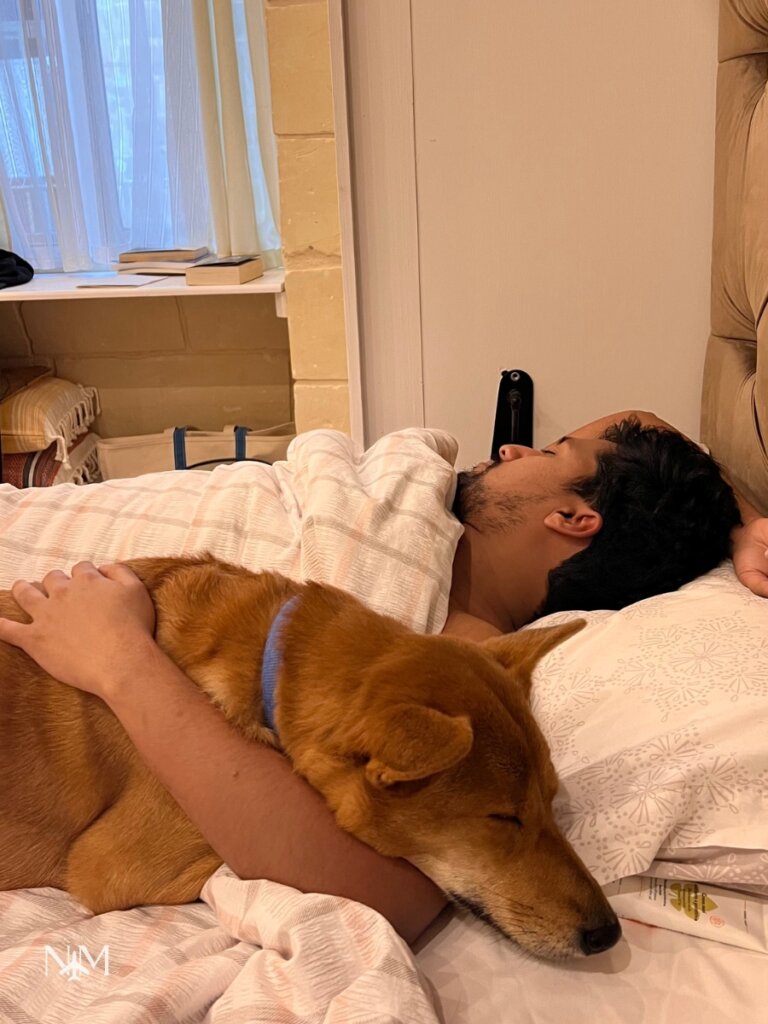
- Immersive local living and often comes with pets to cuddle
Cons:
- Not always available on your travel dates
- Commitments to pets or plants can limit flexibility
- Requires building trust and a strong profile
Nomad Nest: Final Thoughts
There you have it — the meaning behind ‘nomad nest’ and why I call all my accommodations that. It’s a comforting, grounding term, more personal than ‘rental’ or just ‘accommodation.’ It’s also more honest than saying ‘home,’ since as digital nomads, we’re often visitors, not legal residents. Plus, with its catchy alliteration, it’s easy to remember.
Feel free to use ‘nomad nest’ for wherever you call home or settle next. Just remember, you heard it here first! 😉